








Difference Between Active Income and Passive Income Revealed: A Powerful Positive Guide
Difference between active income and passive income is a critical concept for anyone planning to earn online, start freelancing, or build a digital career. Many people fail not because opportunities do not exist, but because they misunderstand how these income models work and what each one truly requires.
This misunderstanding creates false expectations, poor planning, and frustration. When people expect fast results from the wrong income type, they often give up too early or make harmful decisions.
This article explains the difference between active income and passive income by focusing on real mistakes people make. It also offers practical insights to help readers choose the right income path with clarity and confidence.
Difference Between Active Income and Passive Income Explained Clearly
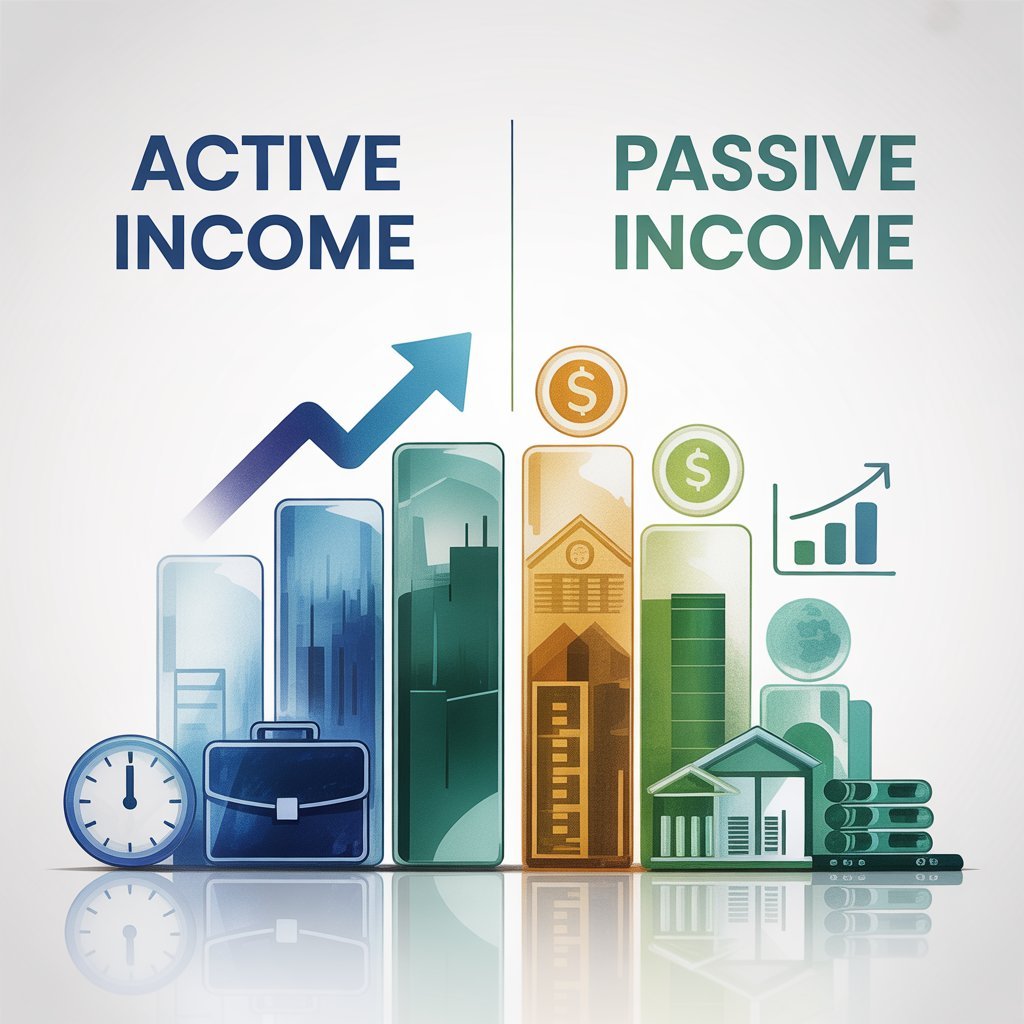
The difference between active income and passive income mainly depends on how effort, time, and income are connected.
Active income requires continuous effort. You earn money only when you work. Passive income requires upfront effort and long-term consistency, where results grow gradually over time.
Understanding this difference early helps prevent disappointment and unrealistic expectations in online earning.
Choosing Online Work Without Learning Required Skills
One of the biggest misunderstandings about the difference between active income and passive income is assuming that passive income does not require skills.
Active income such as freelancing, consulting, or remote jobs needs communication skills, technical ability, and problem solving. Passive income models like blogging, affiliate marketing, or content creation require writing skills, research, planning, and patience.
For example, starting a blog without learning SEO or content structure often leads to slow growth. Similarly, entering freelancing without learning tools creates stress and poor performance.
Skill development is the foundation of both income types.
Unrealistic Expectations About Active Income vs Passive Income
Many beginners fail to understand the difference between active income and passive income timelines.
Active income often delivers faster results because effort and income are directly connected. Passive income usually takes months before showing noticeable results.
Leaving active income too early while expecting passive income to replace it quickly often leads to failure.
Active income rewards effort now. Passive income rewards consistency over time. Both require patience and discipline.
Not Researching Platforms Before Starting Online Income
Another mistake when learning the difference between active income and passive income is choosing platforms without research.
Active income platforms such as freelancing marketplaces have competition, rules, and quality standards. Passive income platforms like blogging systems or affiliate networks depend on trust, audience growth, and long-term effort.
Choosing a platform without understanding its policies often wastes time and energy.
For official earning and financial guidelines, check this external resource:
https://www.ftc.gov/business-guidance
Ignoring Time Management and Work Discipline
Time discipline strongly affects the difference between active income and passive income results.
Active income requires deadlines, schedules, and client coordination. Passive income requires consistent content creation, updates, and monitoring.
Many people treat passive income casually, expecting automatic growth. This slows progress.
Treating both income types professionally builds momentum and long-term value.
Depending on Only One Income Source
Misunderstanding the difference between active income and passive income often leads people to rely on a single income source.
Relying on one client or one platform increases risk. Policy changes, demand shifts, or account issues can disrupt income.
A balanced strategy combines active income for stability and passive income for future growth.
Diversification reduces dependency and increases security.

Skipping Personal Branding and Online Presence
Personal branding strengthens the difference between active income and passive income outcomes.
Active income benefits from strong profiles, portfolios, and professional communication. Passive income benefits from consistent branding, credibility, and audience trust. A freelancer without a clear profile struggles to get clients. A content creator without identity fails to build authority. Creating a simple online presence improves long-term success.
You can read more about building online authority by visiting this internal link.
Earning Guide
Poor Communication in Active and Passive Income
Communication plays a major role in the difference between active income and passive income success. Active income requires clear communication with clients and employers. Passive income involves communication with audiences, collaborators, or service providers.Unclear messages or delayed responses damage trust.Strong communication builds professional relationships and long-term growth.
Not Tracking Progress and Skill Improvement
Failing to track progress weakens understanding of the difference between active income and passive income performance.Active income progress is measured through feedback, completed projects, and skill upgrades. Passive income progress is measured through consistency, engagement, and content performance
.Without evaluation, improvement becomes slow.
Tracking results allows better decisions and smarter growth.
Giving Up Too Early Due to Slow Results
Many people quit because they misunderstand the difference between active income and passive income growth speed.
Active income includes rejection and learning curves. Passive income includes delayed rewards.
Stopping early prevents experience, improvement, and success.
Persistence and patience are essential for both models.

Conclusion
The difference between active income and passive income is based on effort timing, consistency, and expectations. Active income requires continuous work, while passive income requires long-term commitment after initial effort.
Both income models demand skills, discipline, and planning. Avoiding common mistakes allows individuals to build stable and sustainable online careers.
Understanding this difference leads to smarter decisions and realistic success.
Disclaimer
This article is for educational and informational purposes only. Income results vary depending on individual skills, effort, experience, and market conditions. No income is guaranteed. Readers should conduct independent research and seek professional advice before choosing any income strategy.