Signs Your Plant Needs Repotting (And How to Check)
How to Know When Your Plant Needs Repotting
Most people fall into one of two camps. Either they repot every plant the moment it comes home, just to be safe, or they never repot at all until a plant is visibly struggling. Both habits cause problems, just in opposite directions. The signs your plant needs repotting are usually there weeks before anything looks obviously wrong, if you know where to look.
This guide skips the guesswork and walks through exactly what to check, in what order, so you can tell the difference between a plant that’s genuinely outgrowing its pot and one that just needs better care in the container it’s already in. Getting this right matters more than it seems. Repotting too soon disturbs roots that didn’t need disturbing, while waiting too long can quietly stunt a plant’s growth for months before you notice anything wrong on the surface.
The Five-Minute Root Check
Before looking at leaves or watering habits, the most reliable of all the signs your plant needs repotting is what’s happening underneath the soil, and checking takes less time than most people expect.
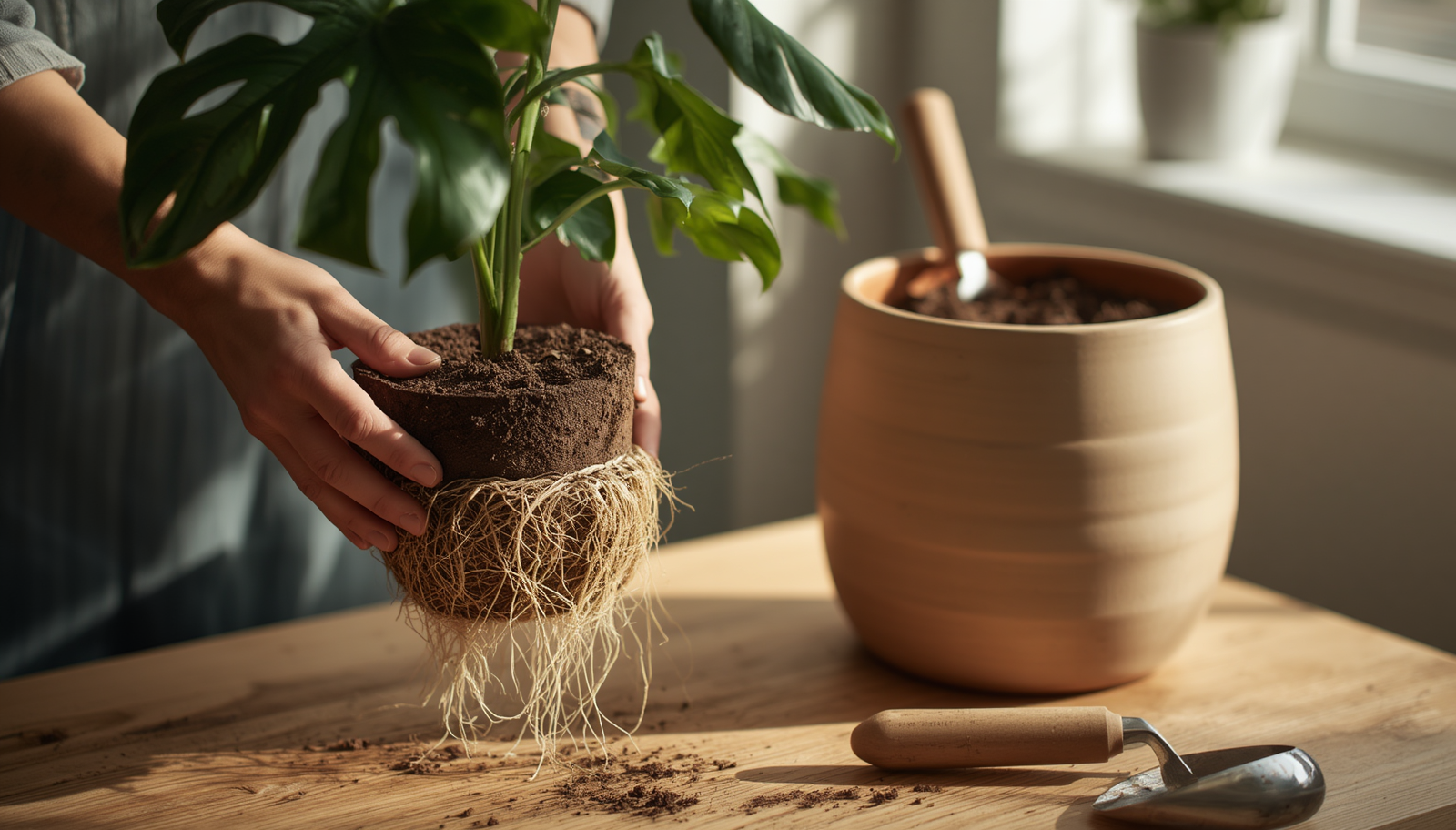
Water the plant lightly a few hours beforehand, since damp soil releases from the pot more easily than bone-dry soil. Turn the pot on its side, support the base of the plant with one hand, and gently slide the root ball out. If it doesn’t budge, tap the rim of the pot against a table edge or run a butter knife around the inside edge to loosen it.
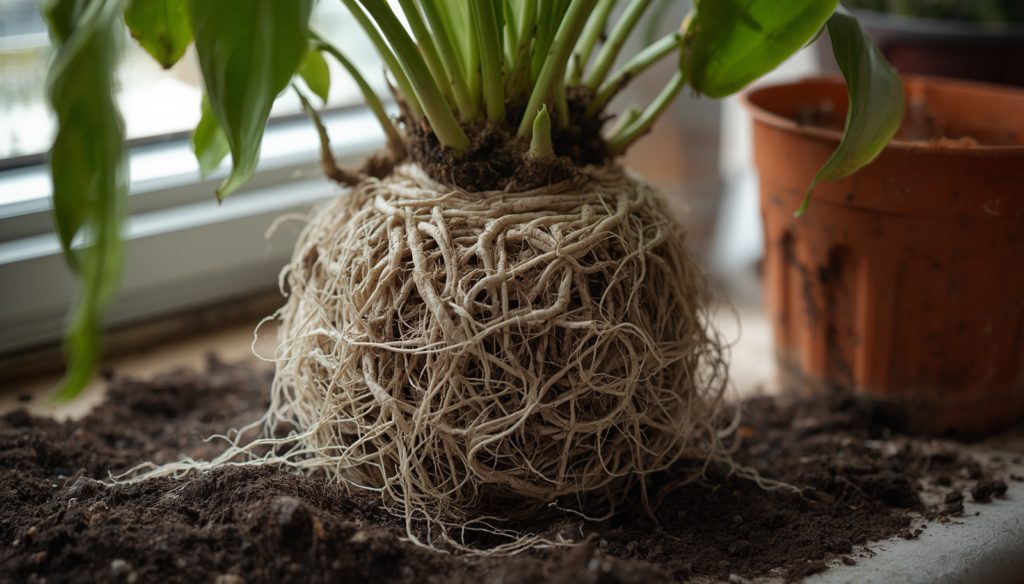
Once it’s out, look at what’s holding the soil together. A little visible potting mix around the edges is normal and means there’s no rush. Roots that have taken over completely, circling the outside of the root ball or packed so tightly you can barely see soil, tell a different story.
Signs You Can Spot Without Removing the Plant
Pulling a plant out of its pot every week isn’t practical, so most of the time you’ll rely on signs your plant needs repotting that show up above the soil line first.
- Water runs straight through. If water used to soak in and now drains out the bottom almost immediately, there’s likely more root than soil left to absorb it.
- You’re watering far more often than you used to. A pot that dried out every ten days a few months ago and now needs water every three or four is a strong clue the root mass has expanded.
- Roots are visible at the surface or through the drainage holes. This is one of the clearest, least ambiguous signs your plant needs repotting and rarely means anything else.
- Growth has slowed or stalled, despite good light and regular feeding during the growing season, which often means the roots have run out of room to support new growth.
- The plant looks top-heavy or tips over easily, since a root system that has outgrown its container often loses the anchoring weight a properly sized pot provides.
- A crust of white or tan mineral buildup forms on the soil surface or the outside of the pot, a sign the growing medium has broken down and needs refreshing even if the roots aren’t fully bound yet.
Any single item on this list is worth watching. Two or three together are a fairly confident signal it’s time to check the roots directly.
Root-Bound vs Root Rot: Don’t Confuse the Two
Not every root problem calls for the same fix, and mixing these up leads to the wrong action at the wrong time. This is one of the most overlooked parts of reading the signs your plant needs repotting correctly, since both problems can make watering feel unpredictable in similar ways.
A root-bound plant has healthy, firm, light-colored roots that are simply too dense for the pot. The solution is straightforward: move up to a larger container. Root rot looks very different: roots appear brown, black, or mushy, sometimes with a sour smell, usually from soil that’s stayed wet too long. That plant needs less water and possibly a trim of the damaged roots, not necessarily a bigger pot. Assuming every root problem is a size issue can mean repotting a plant that actually needed drier soil, which does nothing to fix the underlying cause.
How Quickly Do Different Plants Outgrow Their Pots?
Growth rate has a big influence on how often you’ll see the signs your plant needs repotting show up, since fast growers fill a container far quicker than slow ones. Knowing roughly what to expect from your specific plant also helps you avoid checking the roots too often out of unnecessary worry.
| Plant Type | Typical Repotting Frequency | Notes |
|---|---|---|
| Pothos, philodendron, monstera | Every 1–2 years | Fast, vigorous growers that fill pots quickly in good light |
| Peace lily, spider plant | Every 1–2 years | Often signal readiness by wilting faster between waterings |
| Snake plant, ZZ plant | Every 3–5 years | Grow slowly and often prefer being slightly snug in their pot |
| Succulents and cacti | Every 2–4 years | Slow growth, and oversized pots increase the risk of overwatering |
These are general ranges, not fixed rules. A plant in bright light with regular feeding will often outgrow its pot faster than the same species kept in a dimmer spot.
When Repotting Can Actually Do More Harm Than Good
Not every plant showing stress needs a new pot, and repotting at the wrong moment can set a healthy plant back for weeks. It’s worth being just as careful about misreading the signs your plant needs repotting as it is about missing them entirely.
Skip repotting immediately after bringing a new plant home. Nursery plants are often already root-bound, but they also need time to adjust to your home’s light and humidity first, so give it two to four weeks before making any changes. Avoid repotting a plant that’s actively flowering, since the disruption can cause it to drop blooms early. Hold off during winter dormancy too, when most houseplants are barely growing and slower to recover from root disturbance. And if a plant looks sickly but isn’t actually root-bound, repotting won’t fix the real problem, whether that’s a pest, a lighting issue, or overwatering, and can add transplant stress on top of it.
The Best Time of Year to Repot
Spring, just as plants come out of their winter slowdown and into active growth, is the window most experienced growers recommend. Roots recover fastest when a plant is already producing new growth, which means less stress and a quicker return to normal. That said, if you spot several of the signs your plant needs repotting and it’s the middle of summer, waiting several months isn’t necessary. Severely root-bound plants benefit more from prompt repotting than from strict adherence to a calendar.
Once You’ve Confirmed It’s Time
If the root check and the above-soil signs both point the same direction, the next steps are straightforward. Acting on the signs your plant needs repotting doesn’t require a complicated process. Choose a new pot roughly one to two inches wider than the current one, since a dramatic size jump can leave too much unused soil holding excess moisture around the roots. Gently loosen any tightly circling roots before repotting rather than leaving them coiled, and use a fresh, well-draining potting mix rather than reusing old, compacted soil. Water thoroughly after repotting, then keep the plant out of direct sun for a few days while it settles into its new space.
Still Not Sure?
What are the clearest signs your plant needs repotting right now? Roots visibly growing through the drainage holes or circling the top of the soil are the most reliable single indicator, since they rarely mean anything other than a plant that has outgrown its container.
How often should I check my plants for repotting signs? A quick visual check every few months is enough for most houseplants, with a more thorough root check whenever watering habits or growth noticeably change.
Is it bad to repot too early? Yes, somewhat. Repotting before a plant needs it disturbs healthy roots unnecessarily and can slow growth temporarily, so it’s generally better to wait for clear signs rather than repotting on a fixed schedule.
Can I use the same pot after repotting? Only if the plant wasn’t actually root-bound and you’re simply refreshing old soil. If the roots have filled the container, a slightly larger pot is necessary to give them room to keep growing.
Recognizing the signs your plant needs repotting comes down to checking two things regularly: how quickly the soil dries out, and what the roots look like when you take a look underneath. Once that becomes a habit, repotting stops being a guessing game and turns into routine maintenance.
If you still have any doubt you can Contact Us
Further reading:
Related Articles
 Plant Care Basics
 Plant Care Basics
 Plant Care Basics
Leave a Reply