How to Fertilize Indoor Plants: A Simple Beginner Guide
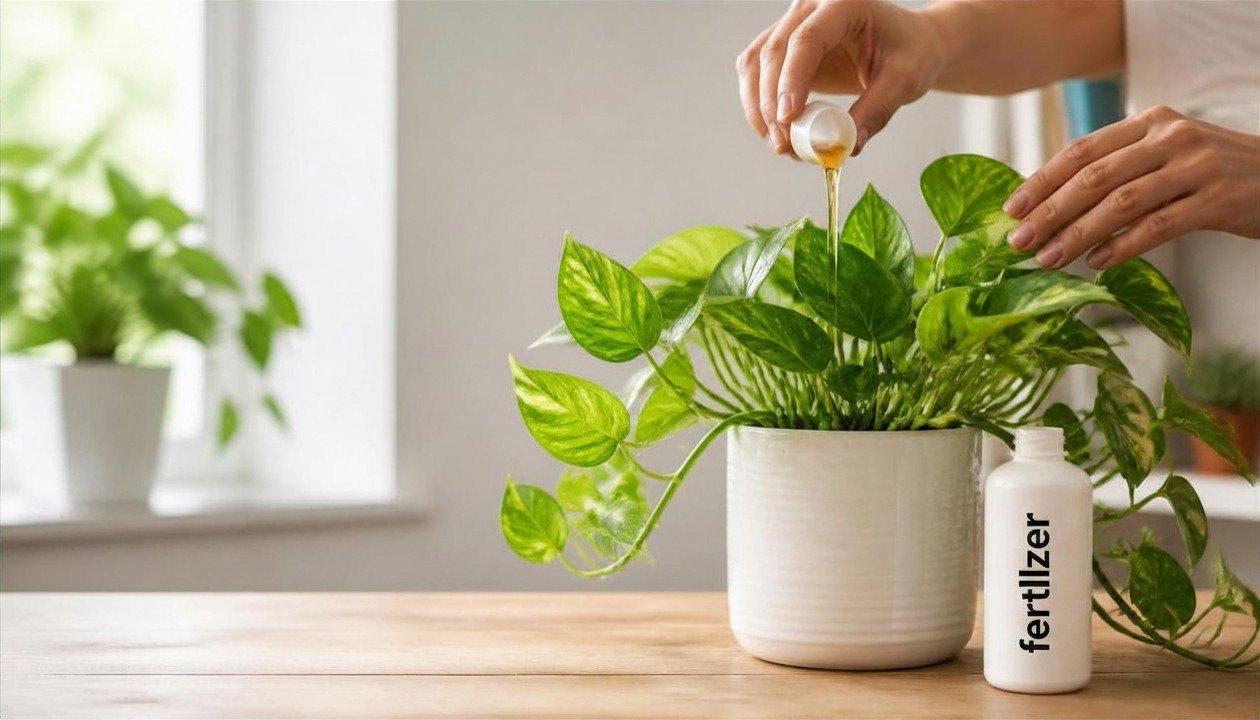
How to Fertilize Indoor Plants for Beginners
Soil alone can’t feed a houseplant forever. Every time you water, a little bit of whatever nutrients were left in the potting mix washes out the drainage hole, and after a few months there’s simply not much left for the roots to draw on. That’s the entire reason fertilizer exists, and it’s also why so many slow-growing, pale houseplants aren’t sick at all. They’re just hungry.
Knowing how to fertilize indoor plants correctly isn’t about memorizing a strict formula. It’s a small handful of ideas, what fertilizer actually contains, how often plants realistically need it, and how to avoid overdoing it, that make the whole subject far less intimidating than the wall of products at a garden center might suggest. Get the basics right once, and the same simple routine applies to almost every plant you bring home afterward.
What’s Actually in a Bottle of Fertilizer
The first step in learning how to fertilize indoor plants is understanding what you’re actually putting into the soil. Every fertilizer label lists three numbers separated by dashes, something like 10-10-10 or 3-1-2. This is the NPK ratio, and it stands for nitrogen, phosphorus, and potassium, the three nutrients plants need in the largest amounts.
A simple way to remember what each one does: nitrogen supports the parts of the plant growing up, mainly leaves and stems. Phosphorus supports what’s happening down below, the root system. Potassium supports everything all around, general cellular function and overall resilience. A balanced houseplant fertilizer with roughly equal numbers works for most foliage plants, while flowering species like African violets often do better with a formula weighted slightly more toward phosphorus to support blooms.
The Three Common Forms of Fertilizer
Understanding how to fertilize indoor plants also means picking a format that matches how much effort you actually want to put in.
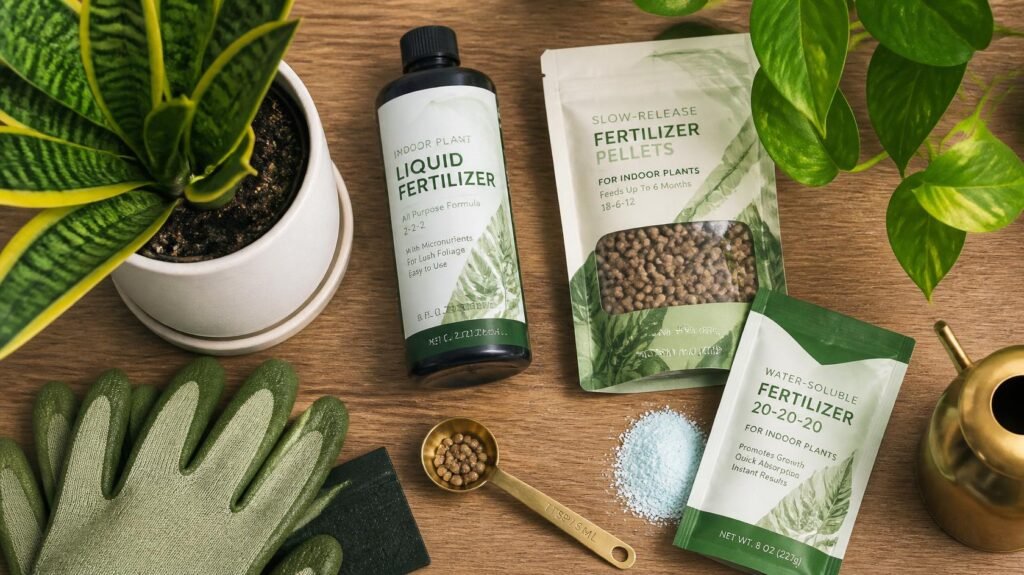
Liquid fertilizer is diluted into water and applied at watering time. It’s fast-acting, easy to control, and the most forgiving format for beginners since it’s simple to dilute further if you’re worried about overdoing it.
Granular or slow-release fertilizer comes as pellets mixed into the soil surface and breaks down gradually over weeks or months. It’s convenient for people who don’t want to think about feeding often, though it’s harder to adjust once it’s already in the pot.
Fertilizer spikes get pushed into the soil and release nutrients slowly near the roots. They’re the lowest-effort option, though they can distribute nutrients unevenly if the roots aren’t growing near the spike itself.
For a first houseplant fertilizer, a diluted liquid formula is usually the easiest way to learn how to fertilize indoor plants without much risk, since you can see and control exactly how much you’re applying each time.
| Format | Effort Level | Best For |
|---|---|---|
| Liquid fertilizer | Low effort, applied at each watering or every few weeks | Beginners who want full control over strength and timing |
| Granular slow-release | Very low effort, applied once every 6–8 weeks | People who don’t want to think about feeding often |
| Fertilizer spikes | Lowest effort, pushed into soil and left alone | Single pots where uneven nutrient spread isn’t a big concern |
Fertilizing Different Types of Houseplants
The basic routine above covers most common foliage plants, but a few categories need a slightly different approach to how much or how often you feed them.
Succulents and cacti need far less fertilizer than tropical foliage plants. A diluted liquid fertilizer once every six to eight weeks during the growing season is usually plenty, since these plants evolved in nutrient-poor soil and can develop weak, stretched growth if overfed.
Flowering houseplants, like African violets or peace lilies, benefit from a fertilizer with a higher phosphorus number relative to nitrogen, since phosphorus supports bud and bloom development more directly than leaf growth.
Ferns and other moisture-loving plants tend to prefer a more diluted feeding, often at half the strength recommended on the label, since their fine root systems are more sensitive to salt buildup than sturdier foliage plants.
How Often Should You Actually Fertilize?
This is where most of the over-fertilizing happens, since it’s tempting to assume more feeding means faster growth. It doesn’t work that way indoors.
Most houseplants only need fertilizer during their active growing season, generally spring through early fall, when longer days and more light actually let the plant use the extra nutrients. A diluted liquid fertilizer applied every two to four weeks during this period is enough for most common foliage plants. Slow-release granular products need far less frequent attention, sometimes just once or twice across the entire growing season.
Winter is different. Shorter days and lower light mean most houseplants slow down or stop growing almost entirely, and feeding a dormant plant doesn’t help it, it just builds up unused salts in the soil. Skipping fertilizer entirely from late fall through winter is standard advice across most university extension guidance on houseplant care.
Natural and DIY Fertilizer Options
Not every option for how to fertilize indoor plants comes in a labeled bottle. A few natural alternatives work well, though they come with tradeoffs worth knowing.
Worm castings mixed into the top layer of soil release nutrients slowly and gently, making them one of the safer options for beginners worried about overdoing it, though they act much more slowly than a liquid feed. Compost tea, made by steeping finished compost in water, provides a mild nutrient boost along with beneficial microbes, but the nutrient content varies a lot depending on what went into the compost, making it harder to dose consistently. Diluted Epsom salt solution can help replace magnesium, which leaches out of soil with regular watering, though it isn’t a substitute for a complete fertilizer since it only addresses one nutrient.
Common kitchen scraps like banana peels or coffee grounds are popular online, but they break down slowly and unevenly in a houseplant pot, and the nutrient benefit is usually much smaller than a proper commercial fertilizer, so they’re better treated as a minor supplement than a primary feeding method.
How to Apply Fertilizer Step by Step
Once you’ve picked a fertilizer format, the actual process of how to fertilize indoor plants safely comes down to a short, repeatable sequence.
- Water the plant first if the soil is dry. Applying fertilizer to bone-dry soil increases the risk of root burn, since the concentrated nutrients have nothing to dilute into.
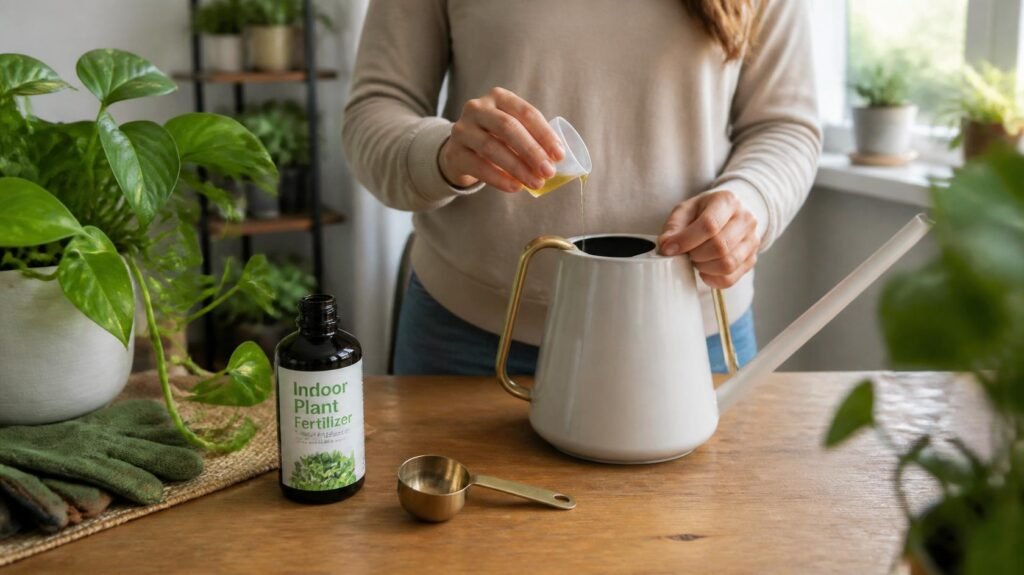
- Mix the fertilizer according to the label, or slightly weaker than recommended if you’re new to a particular product. Many experienced growers use half strength as a safer starting point.
- Apply evenly across the soil surface, not concentrated in one spot, so the roots throughout the pot have equal access.
- Let excess drain from the bottom if using a liquid fertilizer, rather than letting the pot sit in runoff.
- Space applications out based on season, more often in spring and summer, far less or not at all in fall and winter.
This basic sequence covers how to fertilize indoor plants successfully across almost any common houseplant, with adjustments only needed for specialty plants like orchids or cacti, which typically need a more diluted, less frequent approach.
Signs You’re Overfeeding Rather Than Helping
Getting how to fertilize indoor plants wrong usually means too much rather than too little, and it causes more visible damage than beginners expect.
- A white or yellowish crust forming on the soil surface or around the drainage hole, which is mineral salt buildup from repeated applications.
- Brown, crispy leaf tips and edges, often the first visible sign of fertilizer burn on the roots.
- Wilting despite moist soil, since salt buildup makes it harder for roots to absorb water even when it’s present.
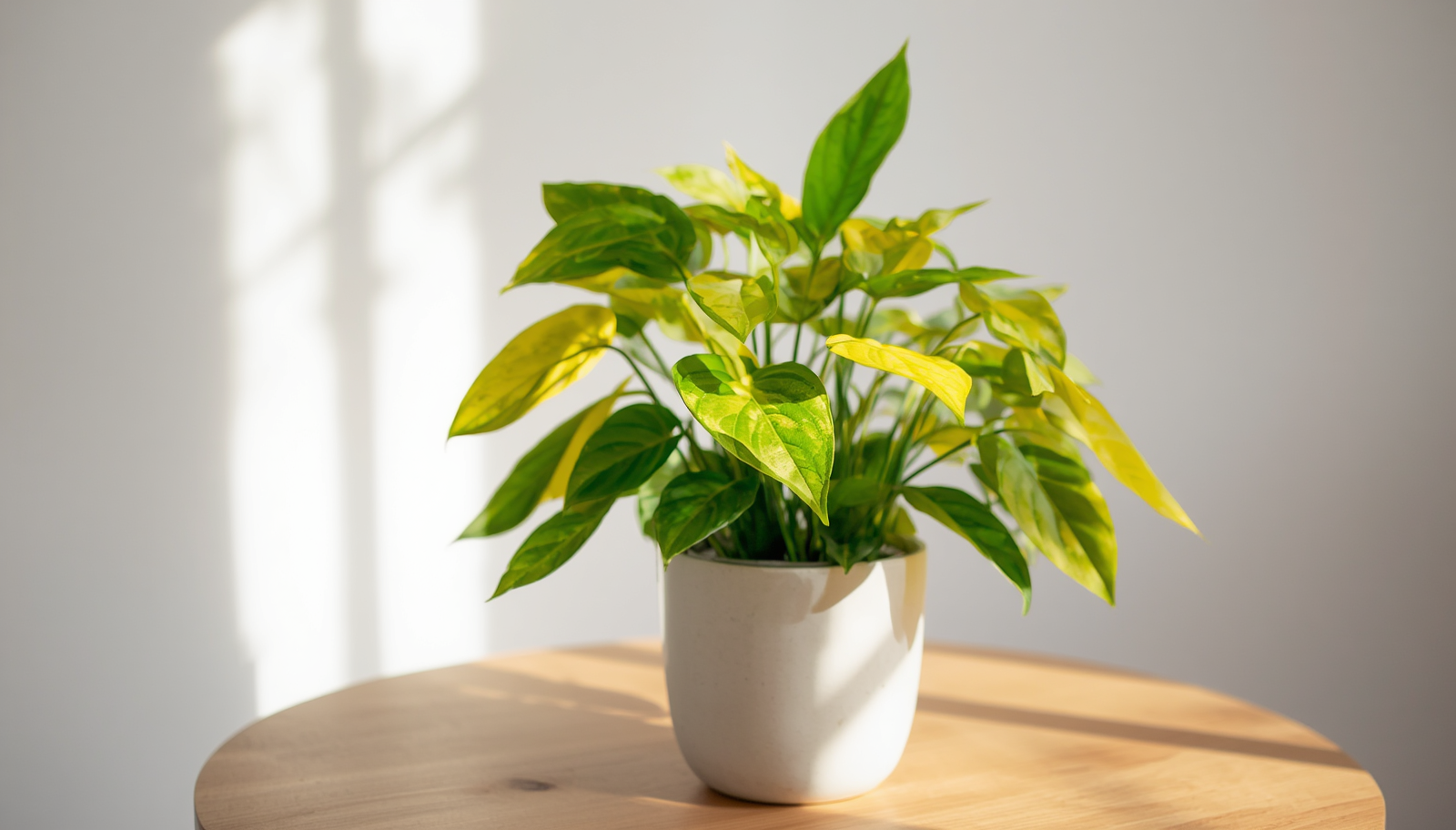
- Slower growth rather than faster, since excess salts can damage the fine root hairs responsible for nutrient uptake in the first place.
If you spot these signs, flush the soil thoroughly with plain water, several times the volume of the pot, to wash out excess salts, and hold off on fertilizing again for at least a month.
A Few More Questions
What’s the single most important thing to know about how to fertilize indoor plants? More isn’t better. Diluting to half strength and feeding a bit less often than the label suggests is a safer default than fertilizing at full strength, since recovering from underfeeding is far easier than recovering from salt burn.
Do I need special fertilizer for every type of houseplant? Not usually. A balanced, general-purpose houseplant fertilizer works for most foliage plants, and only flowering or highly specific plants like orchids and succulents typically benefit from a specialized formula.
Can I fertilize a plant that just got repotted? It’s best to wait. Fresh potting mix usually contains enough nutrients for several weeks, and newly disturbed roots are more sensitive to fertilizer salts while they’re recovering.
What happens if I forget to fertilize for a few months? Nothing serious in most cases. A houseplant that’s missed a feeding or two will simply grow a bit slower until you resume, which is far easier to recover from than the damage caused by overfeeding.
Learning how to fertilize indoor plants really comes down to matching a simple, diluted feeding routine to the season and watching the plant’s response rather than following a rigid schedule. Get that rhythm down, and healthy, steady growth becomes far less of a guessing game.
Further reading:
- University of Maryland Extension: Fertilizer for Indoor Plants
- Iowa State University Extension: How Often Should I Fertilize Houseplants
If you still want to know clear your doubts or have any question than Contact US.
Related Articles
 Plant Care Basics
 Plant Care Basics
 Plant Care Basics
Leave a Reply