Snake Plant Care: The Right Way for Beginners
Snake Plant Care: How to Grow the Unkillable Houseplant
Snake plant earned its nickname honestly. It survives dim offices, forgotten watering schedules and windowsills that get almost no direct sun. Botanists even reclassified it a few years back, moving it from the genus Sansevieria into Dracaena, though nearly everyone still calls it by its old name out of habit.
Good snake plant care really only requires getting one thing right. Everything else about this plant is remarkably forgiving, which is exactly why it shows up in homes, offices and hotel lobbies that see almost no plant maintenance at all. This guide covers what actually matters, from light and watering to varieties, propagation and the handful of problems worth watching for.
Is Snake Plant Really Unkillable?
Not quite, but it comes close. The plant stores water in its thick, upright leaves, which is why it tolerates weeks of neglect that would finish off a thirstier houseplant. That same trait makes it unusually vulnerable to the opposite problem.
Overwatering is responsible for the vast majority of snake plant deaths. Soggy soil around a root system built for drought conditions leads to rot fast, often faster than the plant shows visible stress above the soil line. Learn to leave it alone with water and snake plant care becomes almost effortless.
The nickname holds up better than most plant marketing claims tend to, but it’s worth being honest about the limits. A snake plant left standing in a waterlogged pot for weeks will still die, no matter how tough its reputation. Respecting that one boundary is really all consistent snake plant care asks of you.
Snake Plant Care Basics: Light and Placement
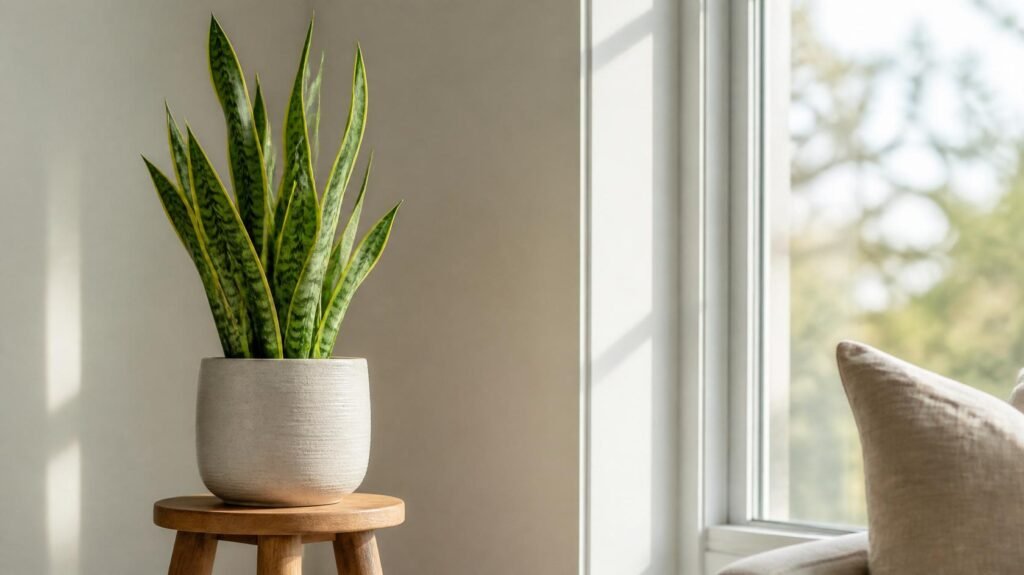
Snake plant tolerates low light better than nearly any other common houseplant, thriving even a few feet back from a north facing window where many species would struggle. Given brighter, indirect light near an east or west facing window, it grows noticeably faster and holds firmer, more upright leaves.
Direct Sun: Tolerated, Not Always Ideal
A few hours of gentle morning sun rarely causes problems, but hours of intense afternoon sun through unfiltered glass can scorch leaves, leaving pale or bleached patches. Bright, indirect light offers the best balance between growth speed and leaf appearance for most homes. If you’re unsure how much sun a spot gets, watch the plant for a few weeks. New growth that looks pale or bleached is a clear sign to move it back from the window slightly.
Watering: The One Thing That Can Actually Kill It
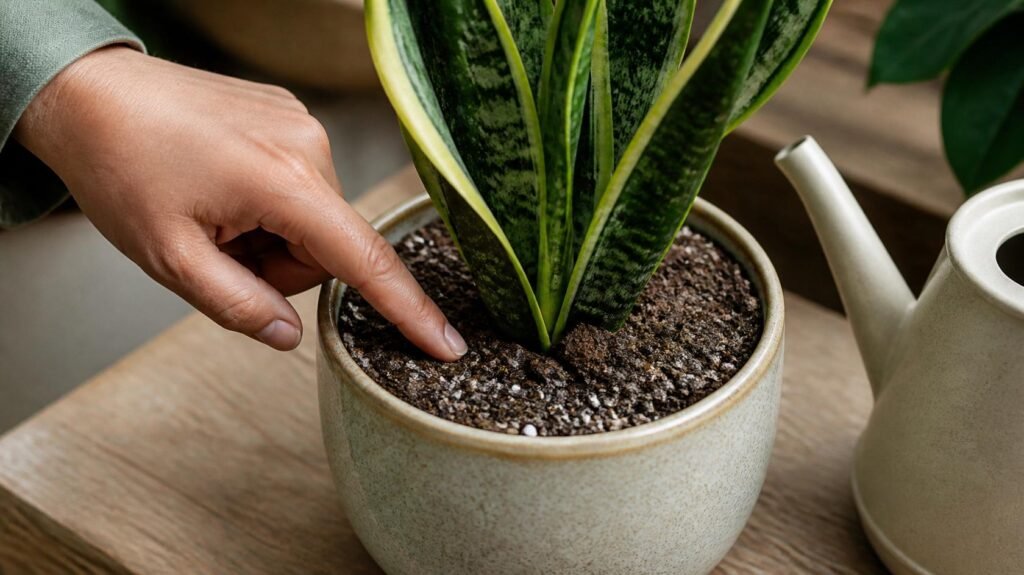
Water only once the soil has dried out completely, top to bottom, which usually means every two to four weeks depending on light, temperature and pot size. During winter, when growth slows considerably, stretching that gap even further is normal and expected.
How to water indoor plants correctly → Plant Care Basics
A pot without drainage holes is one of the fastest ways to undo otherwise careful snake plant care, since excess water has nowhere to go and simply sits against the roots.
Soil and Potting
A well-draining succulent or cactus mix works better than standard potting soil, since snake plant roots need air as much as they need occasional moisture. Adding extra perlite or coarse sand to a regular potting mix achieves a similar result if a specialty bag isn’t on hand.
Snake plant also prefers being slightly snug in its pot. Repotting is rarely urgent and often only needed every three to five years, usually once roots visibly crowd the container or push it apart from the inside.
Temperature and Humidity
Snake plant doesn’t ask for much here either. Average room temperatures between 60°F and 85°F suit it well and it tolerates the drier air common in heated homes during winter without any special effort. Humidifiers, pebble trays and misting are unnecessary additions that snake plant simply doesn’t need to stay healthy.
Cold drafts near a winter window or an exterior door are worth avoiding, since sudden temperature drops stress the plant more than dry air ever would. Otherwise, a typical living room or bedroom offers everything snake plant care requires on the humidity and temperature front.
Feeding Snake Plant
Fertilizer is genuinely optional for snake plant and skipping it entirely causes no real harm. For slightly faster growth, a diluted, balanced houseplant fertilizer once or twice during spring and summer is plenty. Feeding more often than that risks salt buildup in soil that’s already meant to stay fairly dry, which can damage roots faster than a missed feeding ever would.
Snake Plant Varieties Compared
Part of good snake plant care is picking a variety that suits both your space and the light you can offer it. The differences go well beyond looks, since size and growth habit vary quite a bit across the group.
| Variety | Appearance | Typical Height |
|---|---|---|
| Laurentii | Dark green with yellow leaf edges | 2 to 4 feet |
| Moonshine | Solid silvery gray, minimal variegation | 1 to 2 feet |
| Cylindrica | Round, spear shaped leaves | 2 to 5 feet |
| Hahnii (Bird’s Nest) | Compact rosette, dwarf form | 6 to 12 inches |
| Black Coral | Very dark green with faint gray banding | 2 to 3 feet |
Solid colored and dark varieties tend to tolerate low light slightly better than heavily variegated ones, since more of the leaf surface is available for capturing what limited light reaches it. Compact types like Hahnii work especially well on desks or narrow shelves where taller varieties would feel out of place.
Propagation: Division vs Leaf Cuttings
Snake plant can be propagated two different ways and the right choice depends partly on which variety you’re growing.
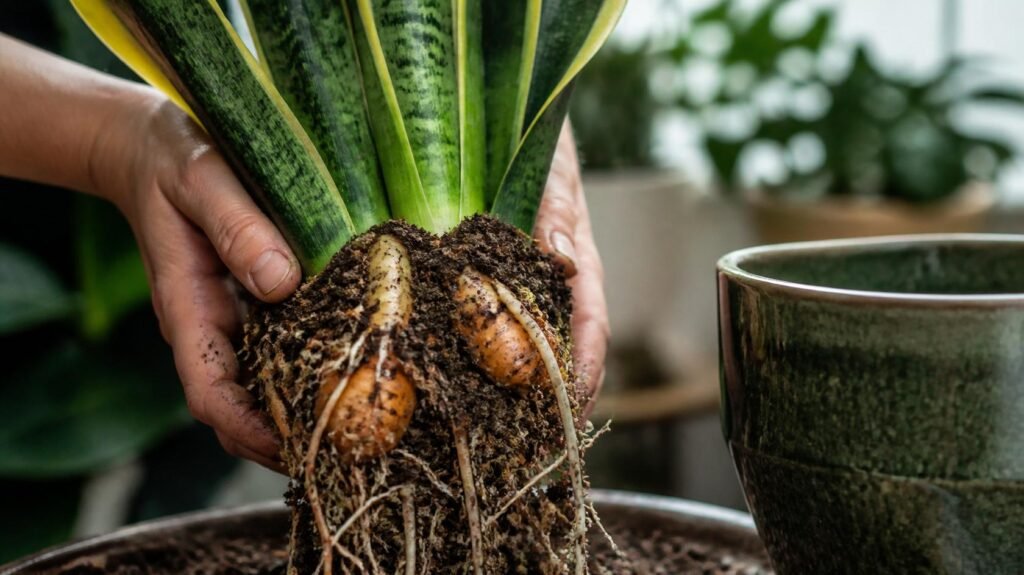
Division involves separating the plant at the root system into smaller sections, each with its own roots and rhizome, then potting them individually. This method preserves variegation reliably and produces a usable plant much faster than starting from a cutting.
Leaf cuttings involve slicing a healthy leaf into several sections and placing the cut ends in water or moist soil until roots form. This works well for solid green varieties, but leaves taken from variegated types like Laurentii typically grow back as plain green, since the chimeral variegation pattern doesn’t carry through this method of propagation.
Common Snake Plant Problems
Most issues trace back to water, one way or another.
The Biggest Snake Plant Care Mistake: Mushy Leaves at the Base
Mushy, dark leaves near the base almost always signal root rot from overly wet soil. Left unchecked, this spreads and can kill the entire plant, so catching it early by cutting back watering and checking the roots matters more than any other single fix.
Wrinkled or curling leaves point to underwatering, though this is far less common and easily corrected with a thorough soak.
Slow or stalled growth in an otherwise healthy looking plant is usually just the plant’s natural pace rather than a problem worth fixing, since snake plant grows slowly even under good conditions.
Is Snake Plant Toxic to Pets and Humans?
Yes, if ingested. According to the North Carolina State Extension Plant Toolbox, snake plant contains compounds that can cause vomiting, nausea, diarrhea and excess drooling in cats, along with mild skin irritation from the sap. The University of Florida IFAS Extension similarly notes that ingestion can cause gastrointestinal discomfort in people and pets, though serious poisoning is rare. Keeping it out of reach of curious pets and small children is still the safer approach.
Snake Plant Questions, Answered
How often should I water my snake plant?
Water only when the soil has dried out completely, which is typically every two to four weeks in most homes and even less often during winter.
Can snake plant survive in a windowless room?
Not indefinitely on its own. It tolerates low natural light extremely well, but a room with zero light source still needs a grow light running several hours a day to keep it healthy long term.
Is snake plant safe for cats?
No, it’s mildly toxic if chewed or eaten, causing stomach upset and drooling in cats, so it’s best kept somewhere pets can’t easily reach the leaves.
Does snake plant really purify the air?
It’s often cited for air purifying qualities, based on older lab studies using sealed chambers rather than typical homes. In a normal room, good snake plant care contributes a small benefit at best and shouldn’t be relied on as a substitute for ventilation.
Snake plant care rewards a light touch more than almost any other houseplant. Pick a spot with reasonable light, water only when the soil is fully dry and leave the rest alone. This plant will keep going for years with barely any effort at all.
Related Articles
 Plants Guides
Leave a Reply