How to Water Indoor Plants Correctly (Most Beginners Get This Wrong)
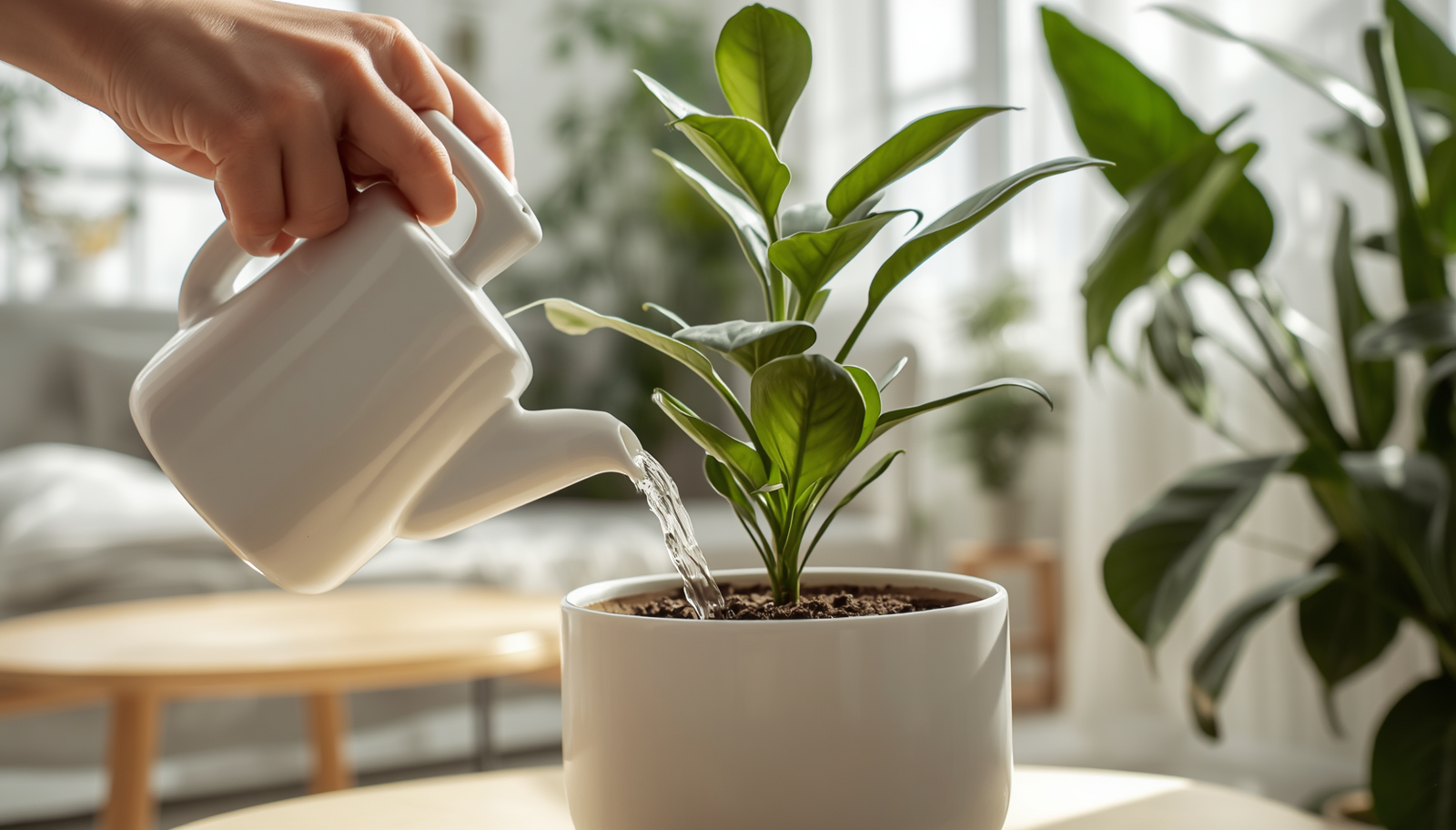
How to Water Indoor Plants Correctly (Most Beginners Get This Wrong)
If you’ve ever lost a plant to what looked like thirst, only to find mushy, blackened roots underneath, you already know the frustrating part of this hobby. Watering feels like the simplest task in plant care, pour some water, wait a week, repeat, yet it’s the single biggest reason houseplants die. Most people don’t water too little. They water too often, on a fixed schedule, without ever checking what the plant actually needs.
Learning how to water indoor plants correctly isn’t complicated, but it does mean unlearning a habit almost everyone starts with: watering by the calendar instead of watering by the soil. This guide walks through what’s actually happening underground, how to read the signs your plant gives you, and a simple routine that works across nearly any houseplant.
Why Watering Feels Simple but Trips Up Almost Everyone
Watering seems intuitive because it looks the same every time: water goes in, plant drinks it. What’s invisible is what happens to the roots afterward. Understanding how to water indoor plants correctly starts with knowing that roots need both water and oxygen to function. When soil stays wet for too long, the air pockets between soil particles fill with water instead, and the roots essentially suffocate.
This is why a weekly watering schedule causes so many problems. Some weeks your plant’s soil might still be damp from the last watering, especially in winter or in a low-light room where the plant is using water more slowly. Add more water anyway, and you’ve started the slow process of root rot, which often doesn’t show up on the leaves until real damage has already been done.
How to Water Indoor Plants Correctly, Step by Step
Instead of a schedule, use a simple check-then-water method. It takes seconds and adapts automatically to the season, the room, and the plant.
- Check the soil first. Push a finger about two inches into the soil. If it’s still damp at that depth, wait. If it’s dry, it’s time to water.
- Water thoroughly, not lightly. A light splash on the surface only wets the top layer and encourages roots to stay shallow. Water slowly across the entire soil surface until it runs freely from the drainage hole.
- Let it drain completely. Never let a pot sit in standing water. Pour off anything left in the saucer after ten to fifteen minutes, since roots sitting in runoff water can rot just as easily as overwatered soil.
- Wait for the next dry check. Don’t water again until the soil has dried back down to roughly the same two-inch depth. This might be five days in summer and three weeks in winter for the same plant.
This approach works for most foliage houseplants. Succulents and cacti need the soil to dry out much further, often several inches down, before watering again, while a handful of moisture-loving plants like peace lilies prefer the top inch to stay only lightly moist.
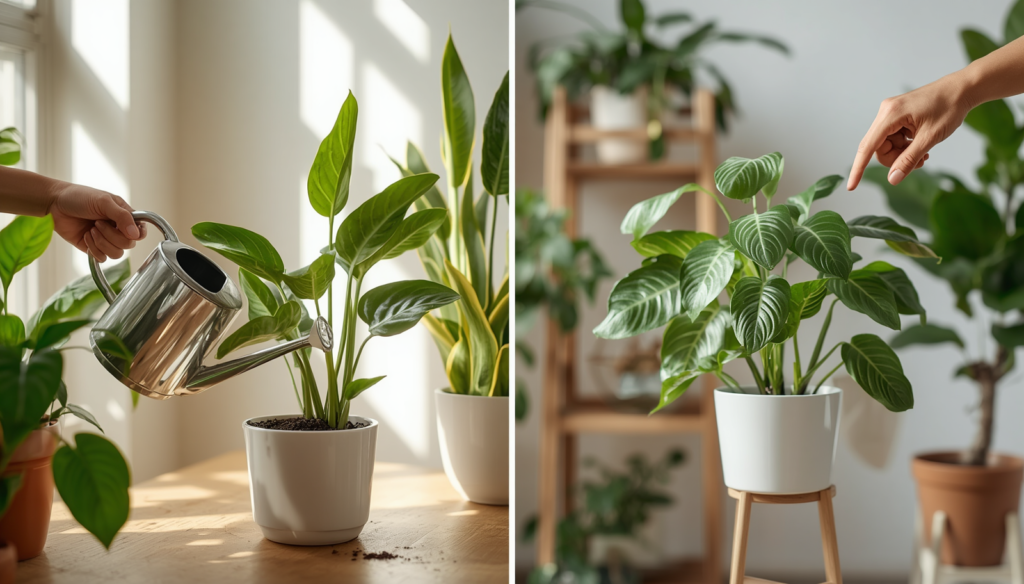
Signs of Overwatering vs Underwatering
Knowing how to water indoor plants correctly also means recognizing when you’ve gotten it wrong. Both problems can look surprisingly similar on the surface, which is exactly why so many people misread a drowning plant as a thirsty one and make the problem worse.
| Symptom | Overwatering | Underwatering |
|---|---|---|
| Leaf color | Yellowing, sometimes with brown edges | Browning, crisping at the tips |
| Leaf feel | Soft, mushy, or limp | Dry, crispy, curling inward |
| Soil condition | Consistently wet, may smell sour | Pulling away from the pot’s edges |
| Stem condition | Soft or mushy near the base | Firm but the plant looks deflated |
| Recovery after watering | Doesn’t improve, may worsen | Perks up within hours |
The fastest way to tell the two apart is to skip the leaves entirely and go straight to the soil. Wet soil with a struggling plant points to overwatering. Dry, pulled-away soil points to underwatering. Leaves alone can mislead you because a plant with rotted roots often looks thirsty even while sitting in soaked soil, since damaged roots can no longer absorb the water around them.
How Often Should You Water Indoor Plants?
There’s no single number that works for every plant, and that’s precisely why fixed schedules fail so often. Watering frequency depends on several factors working together.
- Light levels. Brighter rooms speed up water use, so plants near sunny windows typically need water more often than the same species in a dim corner.
- Pot material. Terracotta pots are porous and let moisture evaporate faster than plastic or glazed ceramic, which hold water longer.
- Season. Most houseplants slow their growth in fall and winter, using noticeably less water even if the room temperature stays the same.
- Plant type. Thick-leaved succulents store water internally and can go weeks between waterings, while thin-leaved tropicals like ferns dry out and need attention much sooner.
Rather than memorizing a number, get in the habit of checking two or three of your plants each time you walk past them. Within a few weeks, you’ll have an intuitive sense of how quickly each one dries out.
Common Watering Mistakes Beginners Make
Even people who understand how to water indoor plants correctly in theory can slip into these habits without noticing.
- Watering on a fixed calendar. Every plant, room, and season dries out at a different rate, so a rigid schedule guarantees you’ll get it wrong some of the time.
- Using a pot without drainage holes. Without somewhere for excess water to go, even careful watering can drown the roots.
- Letting pots sit in saucer water. Standing water keeps the bottom of the root ball constantly wet, which is one of the most common causes of root rot.
- Watering only the surface. A quick splash trains roots to stay near the top instead of growing down into the pot, making the plant more vulnerable to drying out.
- Ignoring the season. Continuing summer watering habits into winter is one of the most common ways a previously healthy plant develops root rot.
- Using ice-cold water straight from the tap. Very cold water can shock roots, especially in tropical species. Room-temperature water is gentler and just as effective.
Best Practices That Make Watering Almost Foolproof
A few small habits make it easier to remember how to water indoor plants correctly without overthinking every session.
- Lift the pot before and after watering. Dry soil is noticeably lighter than wet soil, and comparing the weight becomes an easy shortcut once you’ve done it a few times.
- Group plants by watering needs. Keeping succulents together and moisture-loving plants together prevents you from accidentally applying one routine to plants that need very different amounts.
- Use lukewarm water. It absorbs into soil more evenly than cold water and is gentler on root systems.
- Flush the soil occasionally. Watering thoroughly enough that water runs through and out the bottom every so often helps wash out mineral buildup from tap water and fertilizer, which can otherwise damage roots over time.
Benefits of Getting Watering Right
Once you know how to water indoor plants correctly, the payoff shows up quickly. Plants develop stronger root systems, resist pests and disease more effectively, and grow at a steadier pace instead of cycling between stress and recovery. It also removes a surprising amount of anxiety from plant ownership, since you’re no longer wondering whether today is “watering day.”
Drawbacks and Limitations Worth Knowing
The check-the-soil method isn’t instant. It takes a few weeks of observation before you develop a feel for each plant’s rhythm, and busy schedules can make it tempting to fall back on a fixed routine. Certain plants, like orchids and some ferns, also have watering needs that don’t follow typical houseplant advice, so it’s worth researching individual species rather than assuming one method fits everything.
If you want to read more about Plants Care Basics Explore the category
Plants Care Basics
Frequently Asked Questions
How to water indoor plants correctly, step by step?
Check the soil about two inches down, water slowly and evenly until it drains from the bottom, empty the saucer, then wait until the soil dries back out before watering again.
What is the correct way to water indoor plants?
The most reliable method is to check the soil about two inches down before watering, then water thoroughly until it drains from the bottom rather than following a fixed schedule.
How do I know if I’m overwatering my plant?
Yellowing leaves combined with consistently wet or sour-smelling soil are the clearest signs of overwatering, especially if the plant doesn’t improve after you add more water.
Is it better to overwater or underwater a plant?
Underwatering is generally easier to recover from, since dry roots bounce back quickly once watered, while overwatered roots can rot beyond repair if the problem isn’t caught early.
Should I water indoor plants from the top or bottom?
Both work well. Top watering is simpler for daily use, while bottom watering, setting the pot in a shallow tray of water until the soil absorbs moisture, works especially well for plants with dense foliage that makes top watering messy.
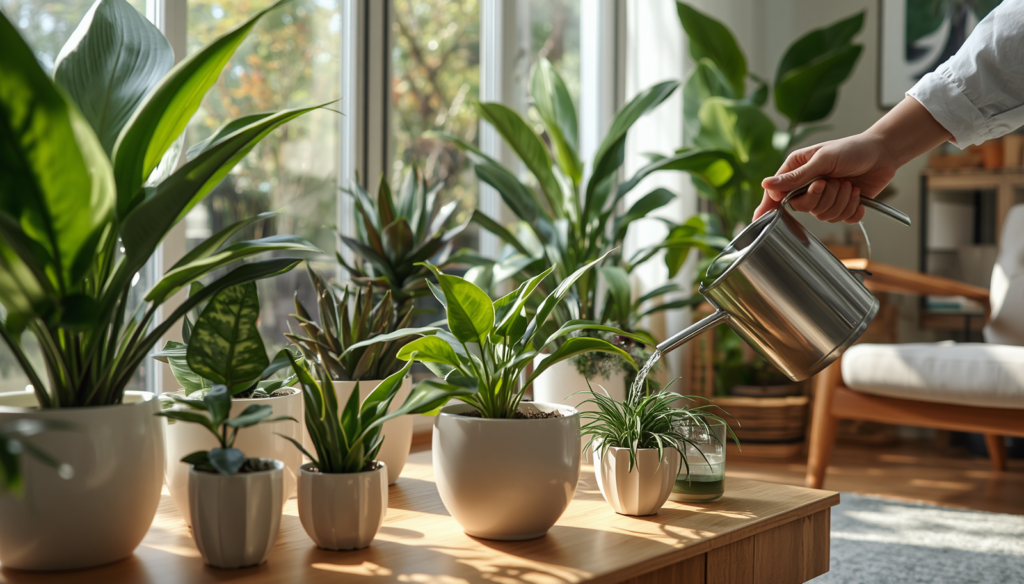
How do I water indoor plants correctly during winter?
Reduce frequency rather than amount. Most plants still need a thorough soak when they do need water, but the gap between waterings often stretches out significantly as growth slows in lower light and cooler temperatures.
Learning how to water indoor plants correctly comes down to one shift in habit: checking the soil instead of the calendar. Once that becomes automatic, most of the guesswork, and most plant deaths, disappear along with it.
Further reading:
Related Articles
 Plant Care Basics
 Plant Care Basics
 Plant Care Basics
Leave a Reply