Plant Leaves Turning Yellow? 8 Real Reasons & Easy Fixes
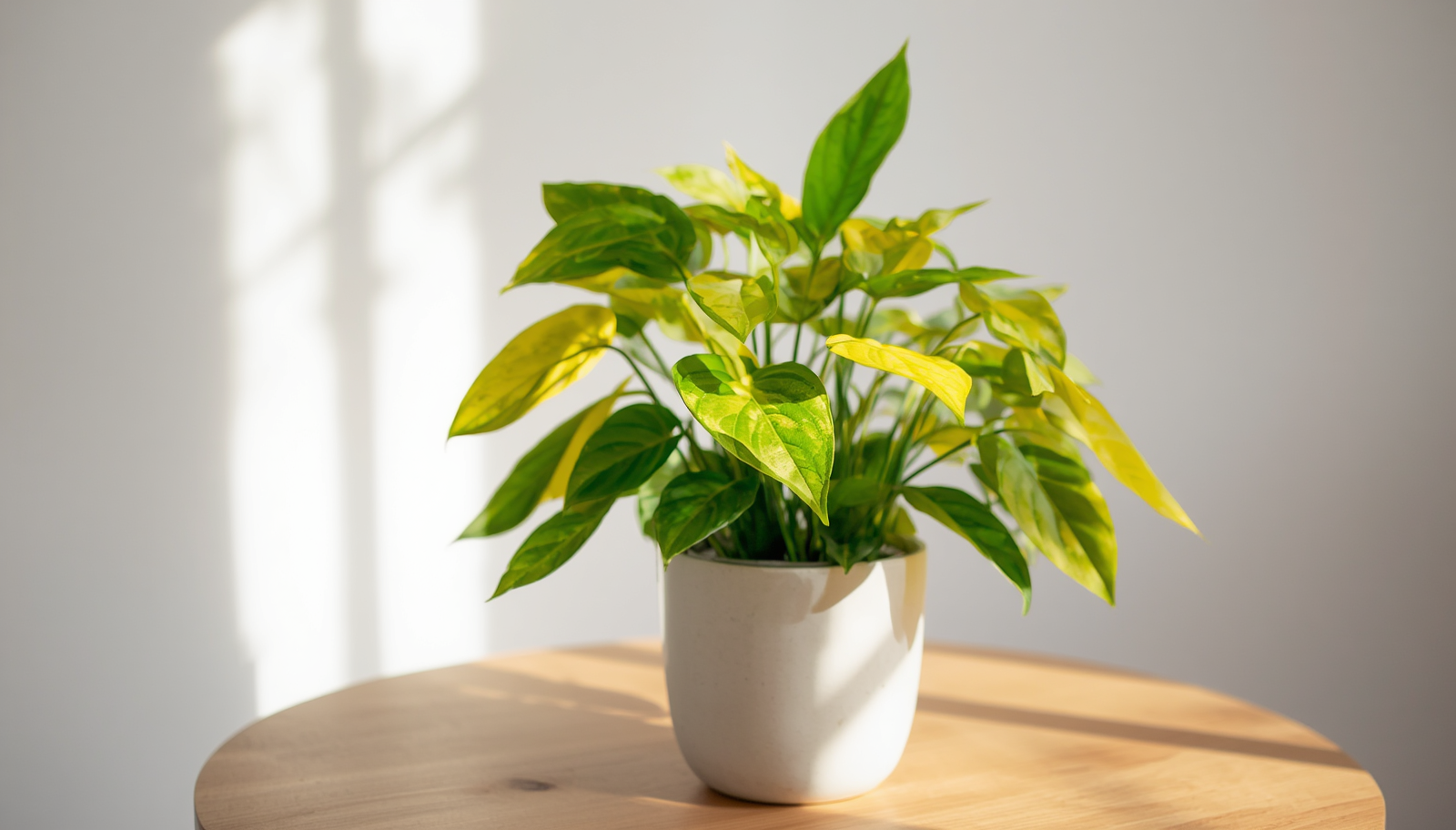
Why Are My Plant Leaves Turning Yellow — 8 Real Reasons
A single yellow leaf can send you straight to a search bar at midnight, and for good reason. Plant leaves turning yellow can mean almost anything, from a completely normal part of aging to a root system in real trouble. The trick isn’t memorizing every possible cause. It’s learning to read the pattern in front of you, since where and how a leaf turns yellow usually points straight at the cause.
Most guides list every possible cause in random order and leave you to guess which one applies. This one works differently. It starts with a quick pattern check, walks through all eight real reasons behind plant leaves turning yellow, and ends with a reference table you can come back to the next time a new leaf starts to fade.
Start Here: What Pattern Are You Actually Seeing?
Before working through causes, take thirty seconds to look at three things. Which leaves are affected, old growth near the base or new growth at the top? Is the yellowing solid across the whole leaf, or does it show up between green veins? And how does the soil feel right now, wet, dry, or somewhere in between?
These three answers narrow things down fast. Old, lower leaves turning yellow uniformly is often aging or a nitrogen shortage. New growth yellowing with green veins still visible usually points to iron. Soggy soil paired with soft, yellowing leaves is almost always water-related. Keep these in mind as you go through the reasons below.
The 8 Real Reasons Plant Leaves Turn Yellow
1. Overwatering
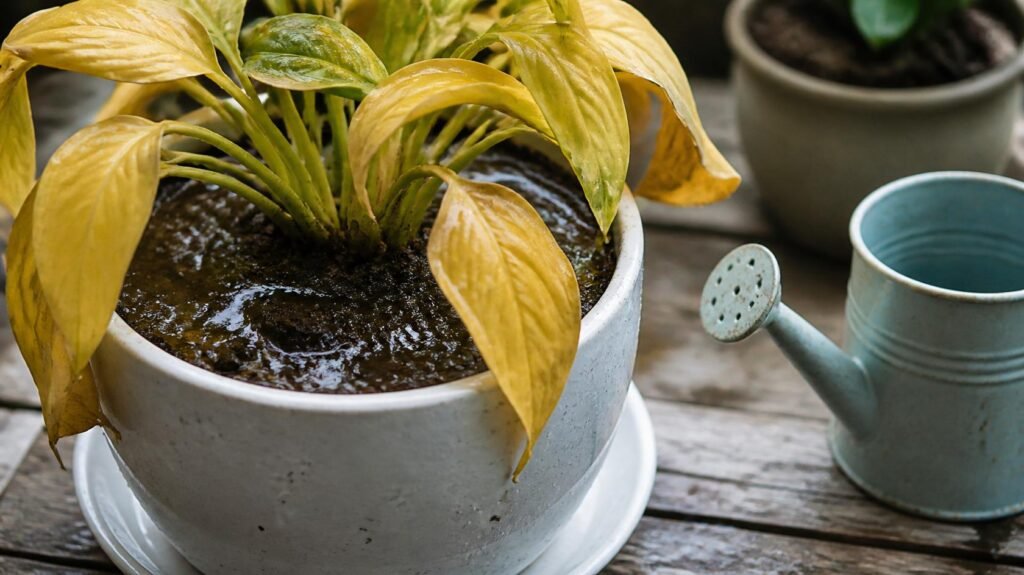
This is the single most common cause of plant leaves turning yellow in home collections. When soil stays wet for too long, roots lose access to oxygen and start to shut down, which shows up above ground as soft, yellowing leaves, often starting near the bottom of the plant. The soil usually feels consistently damp, sometimes with a faint sour smell.
What to do: Let the soil dry out further than usual before the next watering, check that the pot actually drains, and if the problem has been going on for a while, gently check the roots for the brown, mushy texture of root rot.
2. Underwatering
Less common than overwatering but just as real, and one of the easier causes of plant leaves turning yellow to miss because people assume yellow always means too much water. A plant that’s gone too long without water starts sacrificing leaves to conserve moisture, and the yellowing here tends to look drier and more crisp at the edges rather than soft.
What to do: Water thoroughly until it runs from the drainage hole, then get in the habit of checking the soil with a finger before assuming it needs water again on a fixed schedule.
3. Natural Aging
Not every yellow leaf is a problem. Lower, older leaves naturally yellow and drop as a plant redirects energy toward new growth, especially on fast-growing plants like pothos or philodendron. This usually shows up as one or two leaves at a time, not a widespread pattern across the plant.
What to do: Nothing, beyond trimming the leaf once it’s fully yellow. If it’s isolated to older growth and the rest of the plant looks healthy, this is routine maintenance, not a warning sign.
4. Nitrogen Deficiency
Nitrogen is a mobile nutrient, meaning a plant will pull it from older leaves to support new growth when supply runs short. This causes uniform yellowing that starts on the lower, older leaves first, similar to natural aging but spreading further and faster, and often paired with generally slower growth overall.
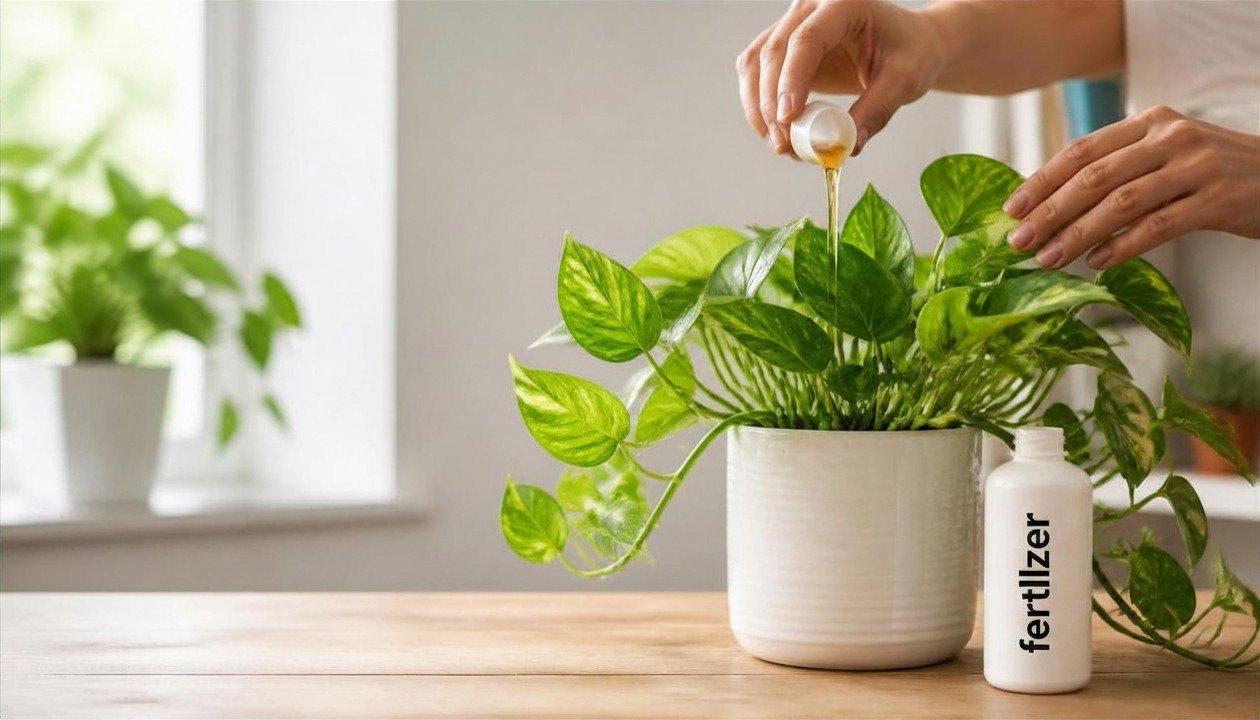
What to do: A balanced houseplant fertilizer during the growing season usually resolves this within a few weeks, since most potting mixes lose their nutrient content after several months of regular watering.
5. Iron Deficiency
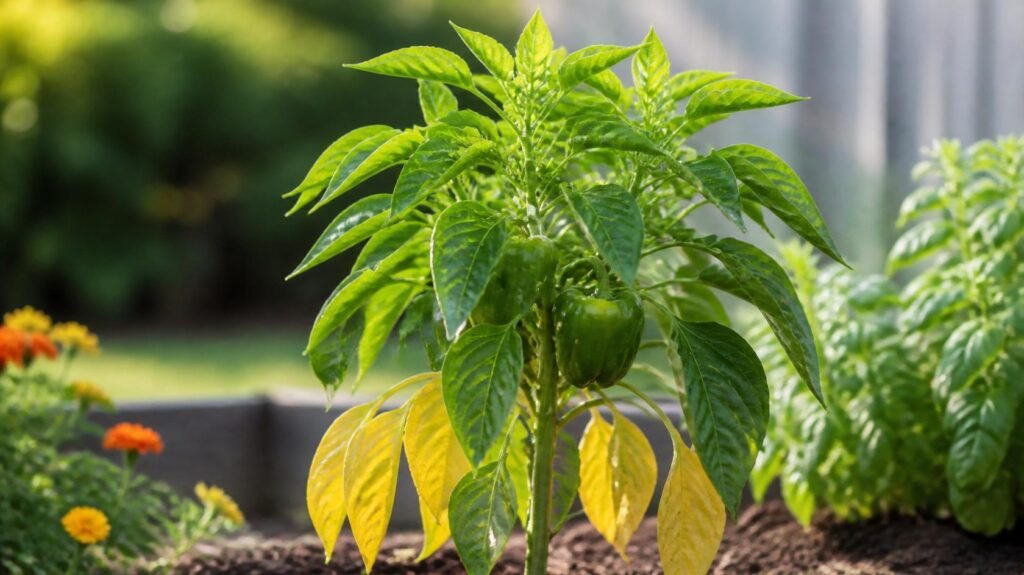
Unlike nitrogen, iron doesn’t move easily within the plant, so this deficiency shows up on new growth first. The telltale sign is interveinal chlorosis, yellow leaf tissue with the veins themselves staying distinctly green, according to research summarized by University of Maryland Extension. It’s more common in alkaline soil or tap water high in minerals.
What to do: A chelated iron supplement can help, though checking whether your water or soil is unusually alkaline addresses the root cause more directly than repeated iron treatments.
6. Too Little Light
Plants kept too far from a window for too long slow their chlorophyll production, and the leaves gradually lose their rich green color. Light-related plant leaves turning yellow tends to affect the whole plant somewhat evenly, rather than showing the sharp patterns nutrient deficiencies produce.
What to do: Move the plant closer to its light source gradually rather than all at once, since a sudden jump into bright light after prolonged low light can shock a plant that’s adjusted to dimmer conditions.
7. Temperature Stress or Cold Drafts
Sudden temperature swings, drafty windows in winter, or air conditioning blowing directly on foliage all stress tropical houseplants, which generally prefer stable conditions. Yellowing from temperature stress often appears on the side of the plant closest to the draft or cold glass.
What to do: Move the plant a foot or two away from the window or vent, particularly during extreme weather, and keep it away from direct contact with cold glass in winter.
8. Pests
Sap-sucking insects like spider mites, aphids, and scale drain nutrients directly from leaf tissue, which shows up as speckled or patchy yellowing rather than a uniform color change. Check the undersides of leaves and along stems, since many of these pests are small enough to miss at a glance.
What to do: Isolate the affected plant, wipe down leaves with a damp cloth, and treat with insecticidal soap or neem oil, repeating every week or two until no new pests appear.
Quick Reference: Match the Pattern to the Likely Cause
Once you’ve read through the reasons above, this table works as a fast recap the next time plant leaves turning yellow catches your eye before you have time to reread the full explanation.
| What You’re Seeing | Most Likely Cause |
|---|---|
| Lower leaves, soft and yellow, soil feels wet | Overwatering |
| Lower leaves, crisp and yellow, soil feels dry | Underwatering |
| One or two older leaves only, rest of plant healthy | Natural aging |
| Uniform yellowing on old leaves, slower overall growth | Nitrogen deficiency |
| Yellow between green veins, mostly on new growth | Iron deficiency |
| Even, gradual pale color across the whole plant | Insufficient light |
| Yellowing concentrated on one side, near a window or vent | Temperature stress |
| Speckled or patchy yellowing, visible bugs | Pests |
What to Do Once You’ve Identified the Cause
Remove any leaf that’s fully yellowed rather than waiting for it to drop on its own, since it won’t turn green again and removing it lets the plant focus energy elsewhere. Address the underlying cause first before reaching for fertilizer as a default fix, since feeding a plant that’s actually overwatered or pest-affected won’t help and can occasionally make things worse. Give any change, whether it’s a watering adjustment or a move to better light, at least two to three weeks before expecting to see new, healthy growth, since plants respond gradually rather than overnight.
One More Thing
Why are my plant leaves turning yellow even after I fixed the watering? Watering is only one of eight possible causes, so if the soil moisture genuinely looks right, check light exposure, recent temperature changes, and the undersides of leaves for pests before assuming the watering fix didn’t work.
Can a yellow leaf turn green again? No. Once a leaf has fully yellowed, the chlorophyll breakdown isn’t reversible, though the plant can still recover and produce healthy new growth once the underlying cause is fixed.
Should I cut off all the yellow leaves at once? Removing already-yellow leaves is fine anytime, but avoid cutting healthy green foliage in the process, since the plant still needs as much leaf surface as possible while it recovers.
How long does it take for a plant to recover after fixing the problem? Most plants show visible improvement in new growth within two to four weeks once the actual cause, whether watering, light, or pests, has been corrected.
Plant leaves turning yellow is rarely a mystery once you slow down and read the pattern instead of guessing. Check which leaves are affected, look at the shape of the yellowing, and feel the soil, and the right cause usually becomes clear before you’ve even finished reading through the list.
If you have any Question about this Contact Us.
Further reading:
- University of Maryland Extension: Leaf Yellowing Problems of Flowers
- Clemson University HGIC: Iron Chlorosis and Soil pH
Related Articles
 Plant Care Basics
 Plant Care Basics
 Plant Care Basics
Leave a Reply