Pothos Plant Care: The Simple Beginner Guide
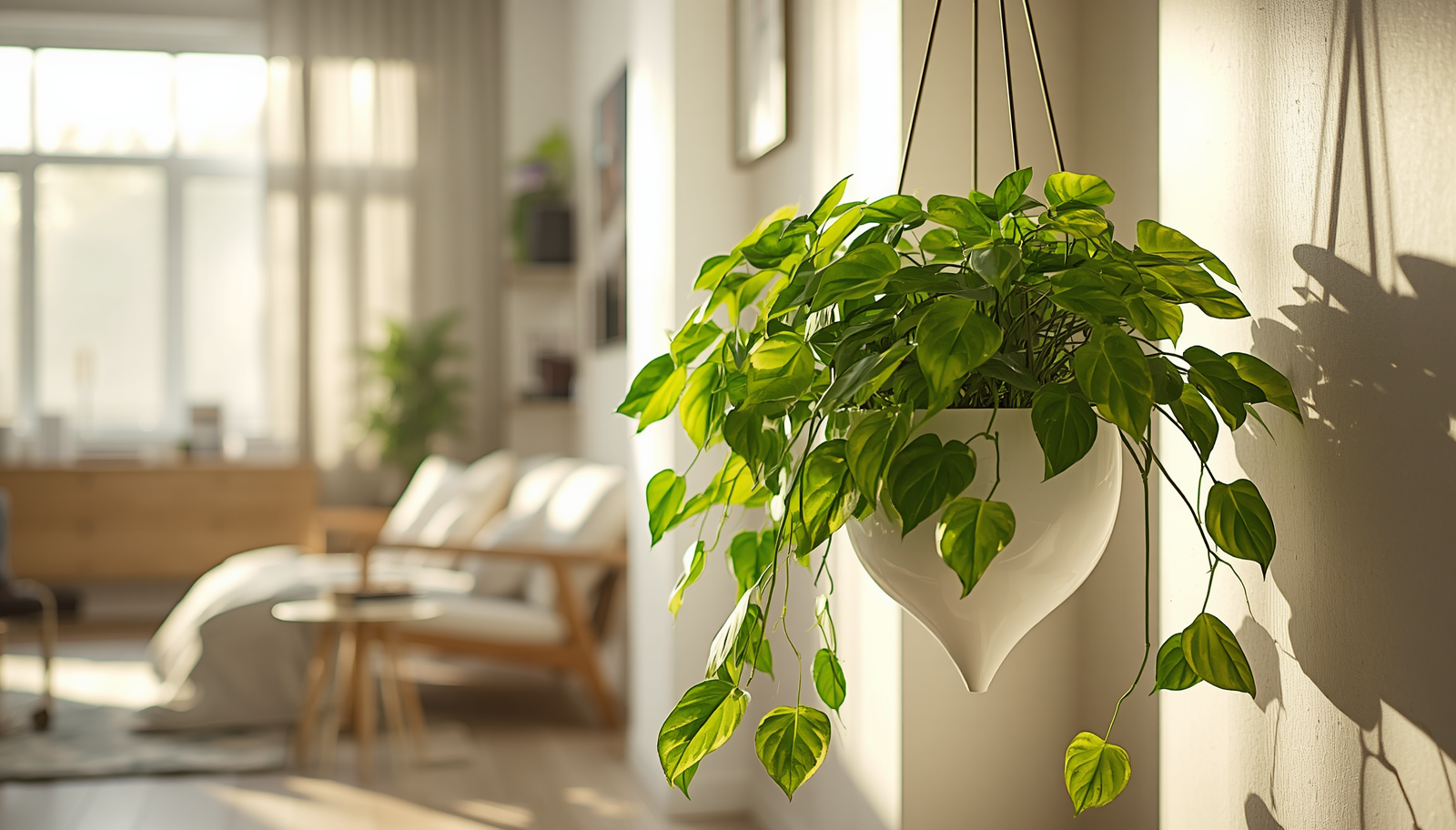
Pothos Plant Care Guide for Beginners
Pothos earns its reputation as the plant people recommend to friends who insist they can’t keep anything alive. Trailing vines, heart-shaped leaves and a tolerance for missed waterings make it one of the most forgiving houseplants sold today. Good pothos plant care isn’t complicated, but a few small habits make the difference between a vine that survives and one that fills a shelf with lush, cascading growth.
This guide covers everything a beginner actually needs, from light and watering to propagation and the handful of problems that show up most often. None of the steps here require special equipment or advanced experience, just the right pothos plant care basics applied consistently.
Quick Care Overview
Before getting into the details, here’s what pothos needs at a glance.
| Care Factor | What Pothos Needs |
|---|---|
| Light | Bright, indirect light; tolerates low light |
| Water | Let soil dry out between waterings |
| Soil | Well-draining potting mix |
| Humidity | Adapts to average home humidity, prefers 50 to 70 percent |
| Temperature | 60 to 85°F |
| Difficulty | Very easy, well suited to beginners |
| Toxicity | Mildly toxic to pets and humans if chewed |
Light and Placement
Pothos does best in bright, indirect light, the kind of spot near an east or west facing window where direct sun doesn’t hit the leaves for hours at a time. According to the North Carolina State Extension Plant Toolbox, pothos also survives for long periods in low light, which is part of why it shows up so often in offices and dim hallways.
What Happens in Low Light
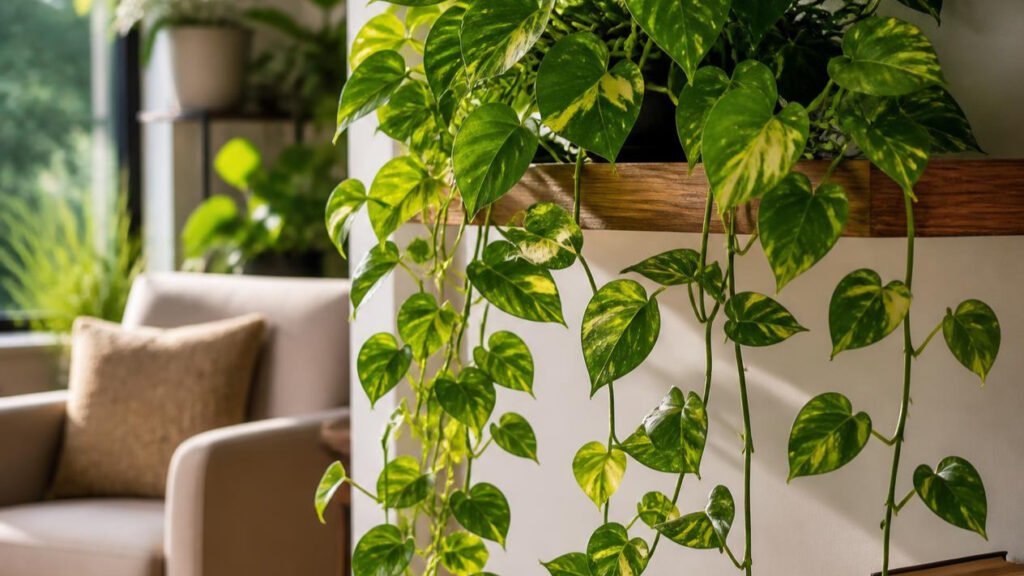
Solid green pothos varieties handle dim rooms without much visible change. Variegated types like Golden Pothos or Marble Queen behave differently. Without enough brightness, the yellow or white patterning gradually fades toward plain green. Once a leaf loses its variegation it won’t regain that pattern. New growth can return variegated once the plant moves back to brighter light, but existing leaves stay as they are.
Pothos Plant Care Basics: Watering and Soil
Overwatering causes more problems than any other single mistake in pothos plant care. The safest approach is letting the top half of the soil dry out completely before watering again, then watering thoroughly until it drains from the bottom of the pot.
How to water indoor plants correctly → Plant Care Basics
A well-draining potting mix matters just as much as timing. Standard indoor potting soil works fine for most pothos, though adding a bit of perlite improves drainage further for anyone who tends to water a little more generously than the plant prefers.
Humidity, Temperature and Feeding
Humidity and temperature are a smaller part of pothos plant care than light and watering, but they still matter. Pothos adapts well to typical household humidity, though it appreciates slightly higher levels if you can offer them. A pebble tray with water beneath the pot or an occasional light misting helps, without being strictly necessary for the plant to stay healthy.
Average indoor temperatures between 60°F and 85°F suit pothos well. Cold drafts near winter windows or doors are worth avoiding, since sudden temperature swings stress the plant more than a slightly warm room ever would.
Fertilizing isn’t demanding either. A balanced houseplant fertilizer every other month during spring and summer is enough, with feeding paused entirely once the plant slows down for winter.
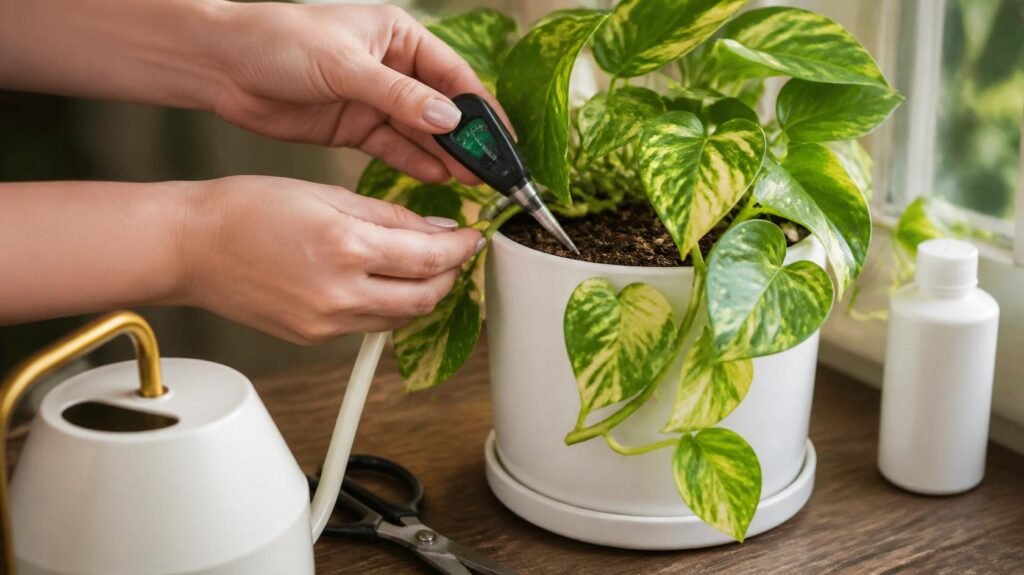
Pruning and Training Pothos
Pruning isn’t required often, but it’s a useful part of ongoing pothos plant care once vines start looking sparse or overly long. Trimming back leggy stems just above a node encourages the plant to branch out and grow fuller instead of continuing as a single thin vine. Cut sections make excellent propagation material rather than waste.
Pothos can also be trained to climb rather than trail. Given a moss pole or trellis, the aerial roots along each vine will attach to the support and leaves tend to grow noticeably larger once the plant is climbing compared to when it trails freely. This is a purely cosmetic choice. A trailing pothos in a hanging basket is just as healthy as one trained upward on a pole.
Popular Pothos Varieties
Part of good pothos plant care is picking a variety that matches the light your home actually offers. Pothos comes in far more forms than the plain green vine sold at most grocery stores. A few of the most common varieties include:
- Golden Pothos, the classic variety with yellow and green marbled leaves
- Marble Queen, featuring heavier white and cream variegation
- Neon Pothos, a solid, bright chartreuse color that holds up well even in dimmer rooms
- Jade Pothos, solid deep green with no variegation at all
- Manjula Pothos, with wavy leaf edges and creamy, splash-like patterning
Solid green varieties like Jade tend to tolerate low light better than heavily variegated types, simply because they have more chlorophyll-producing tissue per leaf.
How to Propagate Pothos from Cuttings
Pothos is one of the easiest houseplants to propagate, which makes it a great way to expand a collection without buying new plants.
- Cut a 4 to 6 inch section of vine just below a node, the small brown bump where aerial roots emerge.
- Remove the lowest leaf or two so at least one node sits underwater.
- Place the cutting in a jar of water and set it somewhere with bright, indirect light.
- Change the water every few days to keep it fresh and prevent rot.
- Once roots reach an inch or two long, usually within two to three weeks, plant the cutting in soil.
A Pothos Plant Care Tip for Faster Rooting
Cuttings root fastest in warm rooms with consistent indirect light. A cutting placed on a cold windowsill in winter will root far slower than the same cutting kept somewhere warmer, even with identical light conditions.
How Fast Does Pothos Grow?
Under good conditions, pothos is a genuinely fast grower, often adding several inches of new vine per month during spring and summer. Growth slows considerably in winter as light levels drop, which is completely normal and not a sign anything is wrong. Vines left untrimmed can eventually reach many feet in length, whether trailing from a shelf or climbing a support, though most home growers prune well before that point simply to keep the plant looking full rather than sparse.
Common Pothos Problems
Most pothos issues trace back to one of a few root causes and most are simple to fix once identified with a bit of basic pothos plant care knowledge.
Yellow leaves are often completely normal. Older, lower leaves naturally yellow and drop as the plant matures, concentrating growth toward the ends of the vines. Widespread yellowing across the whole plant, though, usually points to overwatering instead.
Why are your plant’s leaves turning yellow → Plant Care Basics
Brown, crispy leaf tips typically mean low humidity, underwatering or a buildup of fertilizer salts in the soil. Flushing the soil thoroughly with plain water every so often helps clear out any mineral buildup.
Leggy vines with sparse leaves almost always point to insufficient light. Moving the plant closer to a bright window and trimming back leggy sections encourages fuller, bushier growth over the following weeks.
Is Pothos Safe Around Pets?
Pothos is mildly toxic if chewed or swallowed. According to the Clemson University Home & Garden Information Center, all parts of the plant contain calcium oxalate crystals, which can cause oral irritation in pets and people if ingested. The reaction is generally uncomfortable rather than life threatening, though it’s still worth keeping trailing vines out of reach of curious cats, dogs or small children, either on a high shelf or in a hanging planter.
Frequently Asked Questions
How often should I water my pothos?
Water once the top half of the soil feels dry, which is typically every one to two weeks in summer and every two to three weeks in winter, depending on light and room temperature.
Can pothos really survive in a room with no windows?
Not indefinitely without some light source. Pothos tolerates low natural light well, but a truly windowless room needs a supplemental grow light running for several hours a day to keep the plant healthy long term.
Is pothos toxic to cats?
Yes. Pothos contains calcium oxalate crystals that irritate the mouth and throat if chewed, so it’s best kept somewhere cats and other pets can’t reach.
Why is proper pothos plant care important for beginners specifically?
Pothos forgives more mistakes than most houseplants, which makes it a good way to learn the basics of watering, light and propagation without the steep learning curve that fussier plants demand.
Good pothos plant care really comes down to a few consistent habits: bright indirect light, watering only once the soil has dried out and the occasional trim to keep growth full rather than leggy. Get that rhythm right and pothos rewards very little effort with vines that can trail for years. Once these pothos plant care basics become routine, the plant genuinely takes care of itself.
Related Articles
 Plants Guides
Leave a Reply